You finished serious training but do not know who to contact or how to start.
The paid orchestra work most musicians wait years to find is already available to you
Regional orchestras hire through sub lists, referrals, and direct outreach long before any formal audition win. This guide shows you how that ecosystem actually works and gives you the materials to enter it professionally.
- For trained musicians ready to get hired
- Covers all instrument families
- Resume examples, outreach templates, trackers, and checklists
- Written by an active regional orchestra percussionist and timpanist
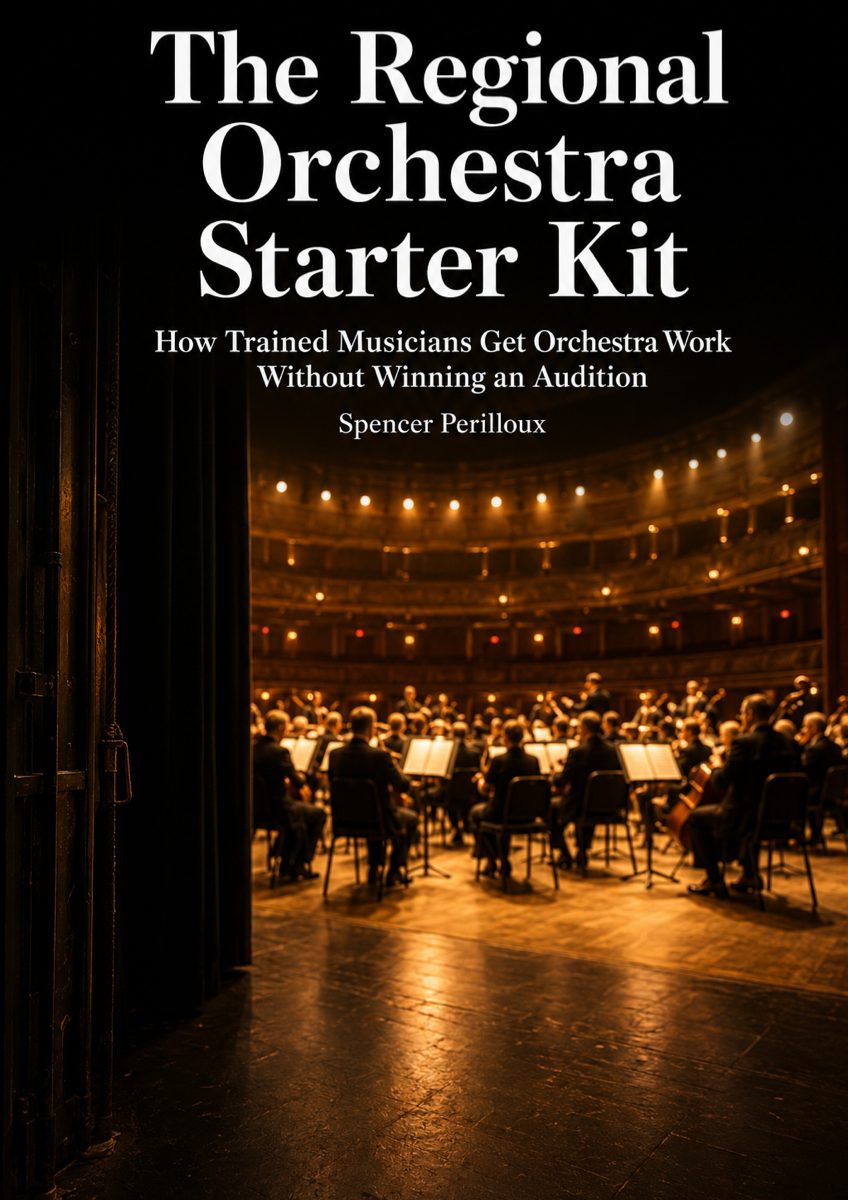
The path most schools describe is not the only one
Most musicians graduate believing professional orchestra work begins the day they win a formal audition. That belief is understandable, and it costs people years. The standard sequence is practice, audition, win, work. It is real, but it leaves out how most early-career musicians actually enter the field.
You understand auditions but not how sub lists, referrals, and contractor networks actually work.
Your resume looks like an academic document instead of an orchestral one.
You are not sure whether you are ready to reach out, or how to tell.
You worry that one bad first impression in a small professional community will follow you.
What changes once you understand the system
The first goal stops being a full-time chair and becomes something you can actually work toward: becoming known, trusted, prepared, and hireable. Those are different targets, and they have a clear path.
You stop waiting to be crowned a professional and start doing professional work at a professional standard, repeatedly, until the calls come. You know which ensembles to research, who to email, what to send, and how to follow up without looking desperate or unprepared.
None of this is guaranteed to produce work, pay, sub-list placement, or a professional outcome, but the actions are within your control.
Specific outcomes
- A one-page orchestral resume that answers what a personnel manager actually wants to know.
- An outreach email and contact-research process you can run starting today.
- A clear read on whether you are ready to reach out and when to check with a teacher first.
- A practical grasp of paperwork, taxes, and AFM basics before anyone asks you for them.
- A first-gig and rehearsal approach that turns one call into repeat work.
Who this is for
- Juniors, seniors, graduate students, and recent graduates with serious classical training.
- Experienced freelancers who have not yet broken into regional orchestra work.
- Self-guided musicians who can prepare parts independently and accept feedback without getting defensive.
- Private teachers and professors who advise students on entering the profession.
This is probably not for
- High school students, whose time is better spent building playing through youth ensembles, community bands, and any chance to perform.
- Anyone looking to inflate credentials, bypass playing standards, or mass-spam orchestras.
- Musicians who expect the guide to guarantee work, pay, or a spot on a sub list.
What is included
The Starter Kit is a practical guide with supporting materials that help you build usable career tools instead of just understanding the idea.
- 104-page guide with 27 chapters organized in seven parts
- Annotated orchestral resume examples
- Outreach email guidance and templates
- Contact tracker template structure
- Audition opportunity assessment
- First-gig, first-rehearsal, paperwork, and payment checklists
- U.S. paperwork, tax, and AFM beginner sections with source notes
- 30-day outreach plan
How it works
Read Part One to confirm readiness, build your resume and outreach materials, research ensembles near you, then use the first-gig checklists when a call comes.
Step 1
Confirm you are ready and understand how musicians actually get called.
Step 2
Build your materials using the resume examples, outreach templates, and contact tracker.
Step 3
Research ensembles, find the right contacts, send concise outreach, and log everything.
Step 4
When a call comes, handle paperwork, prepare the parts, and execute the gig professionally.
Why I wrote this
I got my first paid orchestra gig from an audition I lost. The pool was small, I did not win, but the personnel manager had seen me play and knew my name. A few months later a concert came up, they needed someone, and the call went to me. That is not a lucky story. That is how the ecosystem works once you understand it.
Nobody taught me that in school. I had to figure out, gig by gig, that auditions are not all-or-nothing and that paid work is available to trained players before any major win, if you know how the hiring actually happens.
One-page quick startAnnotated resume exampleContact tracker column listTable of contents
Product questions
Is this only for percussionists?
No. Spencer's regional orchestra work as a percussionist and timpanist is the credibility anchor, but the guide is written for trained classical musicians across instrument families, including strings, winds, brass, percussion, keyboard, and teachers advising students.
Will this get me a job or guarantee paid work?
No. The guide does not promise work, pay, sub-list placement, or a professional outcome. It gives you a practical system for becoming easier to find, evaluate, trust, and hire when you already have the playing foundation to do the work.
Am I ready to start reaching out?
The guide includes readiness checks and encourages early undergraduate players to ask a teacher before reaching out. You should be able to prepare parts independently, accept feedback, and behave professionally before putting your name in front of contractors.
I am in high school. Should I buy this?
Probably not yet. High school students are usually better served by youth ensembles, community ensembles, lessons, and as many real performance opportunities as possible before focusing on professional outreach.
Does it cover the business side, like taxes and paperwork?
Yes. The guide includes beginner-level sections on paperwork, taxes, and AFM basics with official source notes and verification links. It is practical orientation, not legal, tax, or union advice.
What format is it, and how do I get it?
The product is delivered as a PDF ebook with templates and checklists. After payment, Stripe returns you to a success page with protected download access, and a delivery email is sent to the email used at checkout.
I am not in the U.S. Is this useful to me?
The hiring principles, resume thinking, outreach process, and first-gig preparation can still be useful. The paperwork, tax, and union sections are U.S.-oriented and should be checked against your own local rules.
Is this a replacement for lessons or a teacher?
No. It is not a substitute for instrumental training, ensemble experience, or trusted teacher feedback. It is a career-entry framework for musicians who are already building the playing skills required for professional work.
Choose the format
Start with the ebook, or get the complete kit with the course and the ebook included.
Ebook · $27
The Regional Orchestra Starter Kit
The complete written guide, templates, examples, and checklists.
Complete Kit · $47
Course plus ebook
Short video lessons, the full ebook, and protected course access.
Start building your roster
If you have the training and you are tired of waiting for permission to begin, this is the system for entering the regional orchestra ecosystem on purpose rather than by luck. You get the full guide plus the templates and checklists to act on it.
$27 USD
Checkout opens in Stripe. After payment, you return to this site for protected download access and receive a delivery email through Spencer Perilloux Percussion. If your delivery email does not arrive within a few minutes, check your spam folder first, then contact spencer.perilloux@gmail.com.
Ebooks include a 7-day refund window. For technical or access issues, contact Spencer for help.
Secure checkout via Stripe · PDF delivered by email
Related resources
If you also play mallets or want tighter timing, these pair well with the Starter Kit.
course · $47
The Regional Orchestra Starter Kit Course
A practical video mini course for percussionists who want to start finding regional orchestra opportunities, evaluate which ones are worth pursuing, and send cleaner outreach materials.
View productcourse · $247
Unlock The Keyboard
A complete video course and play-along system for mallet players who want the keyboard to feel predictable.
View productebook · $27
Know Where Your Mallets Are Going
Mallet keyboard choreography for accurate, reliable playing.
View productebook · $47
The Percussion Microscope
A complete timing system for percussionists who want evidence instead of guesses.
View product