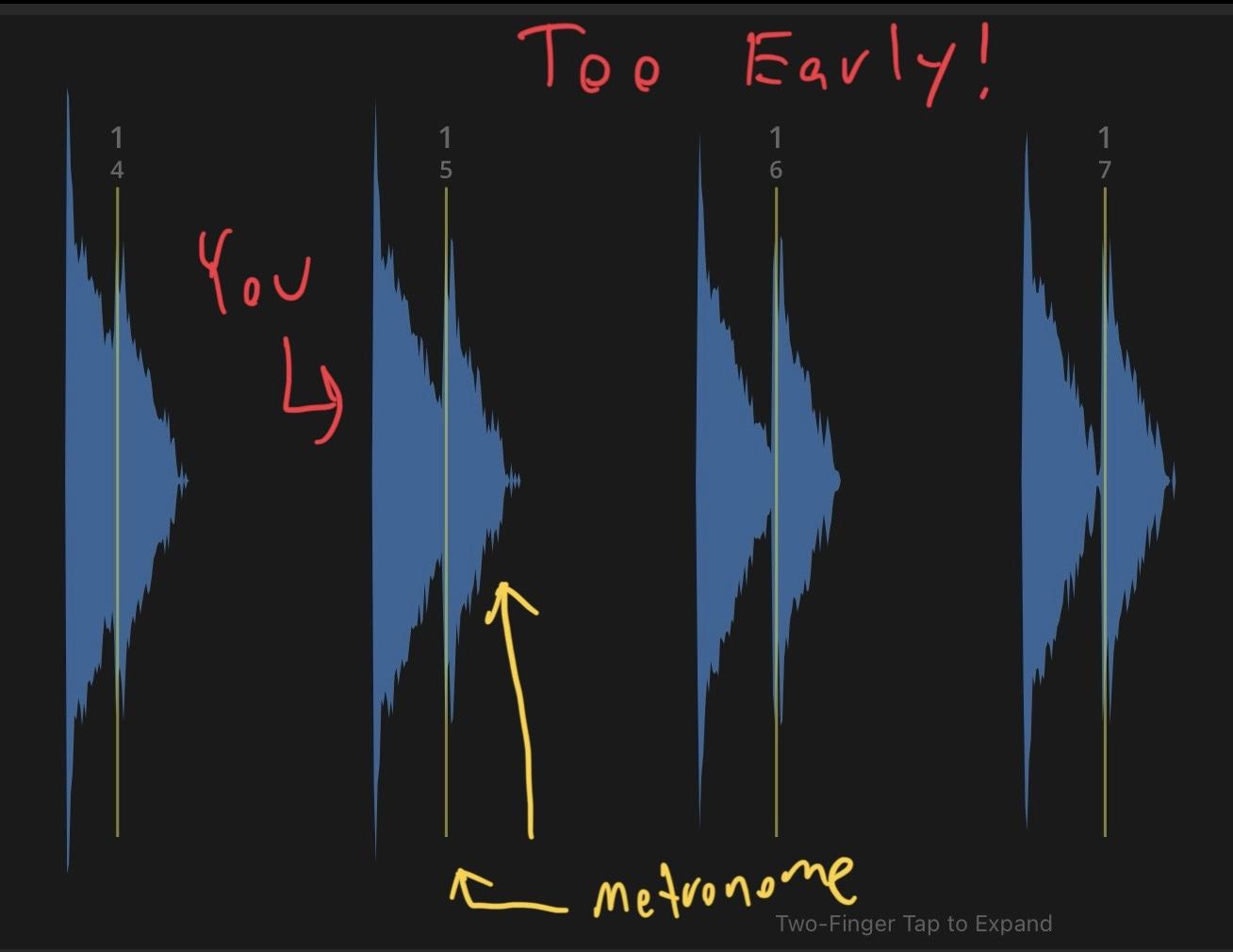
The Clapping Test
Your first diagnostic uses no sticks and no drum. Thirty claps against the grid expose the lean you've carried your whole career, and the direction tells you what to fix first.
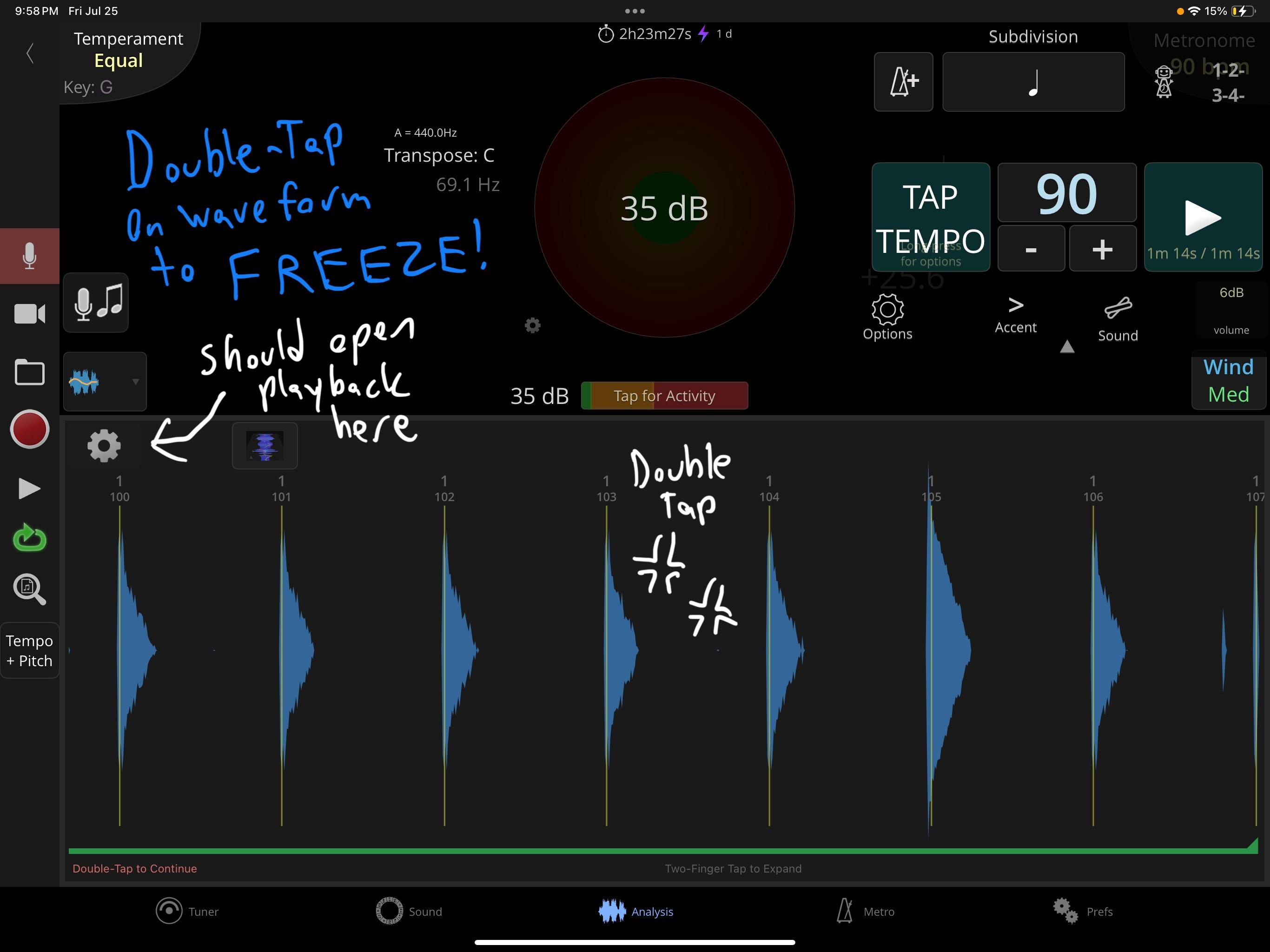
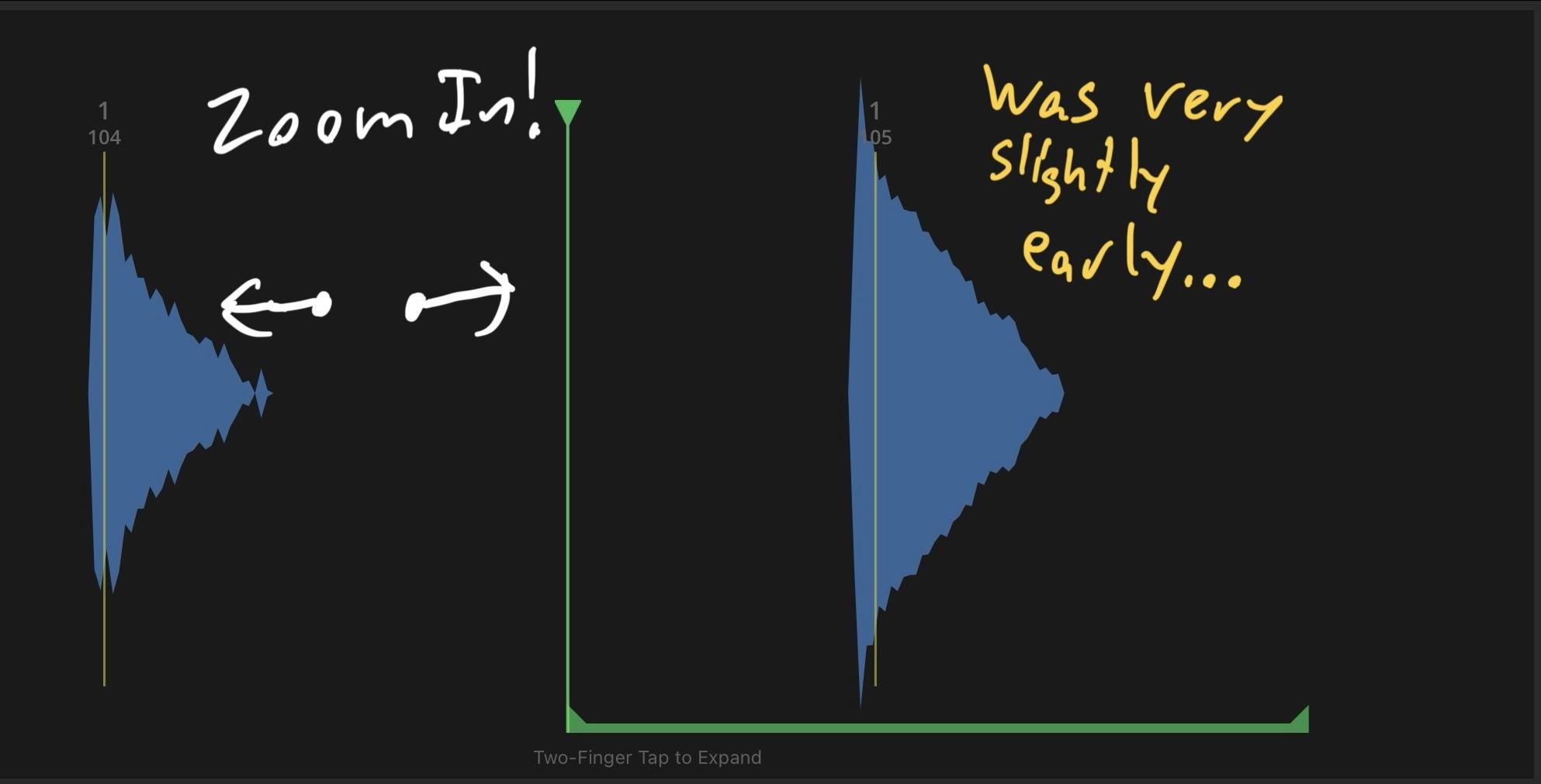
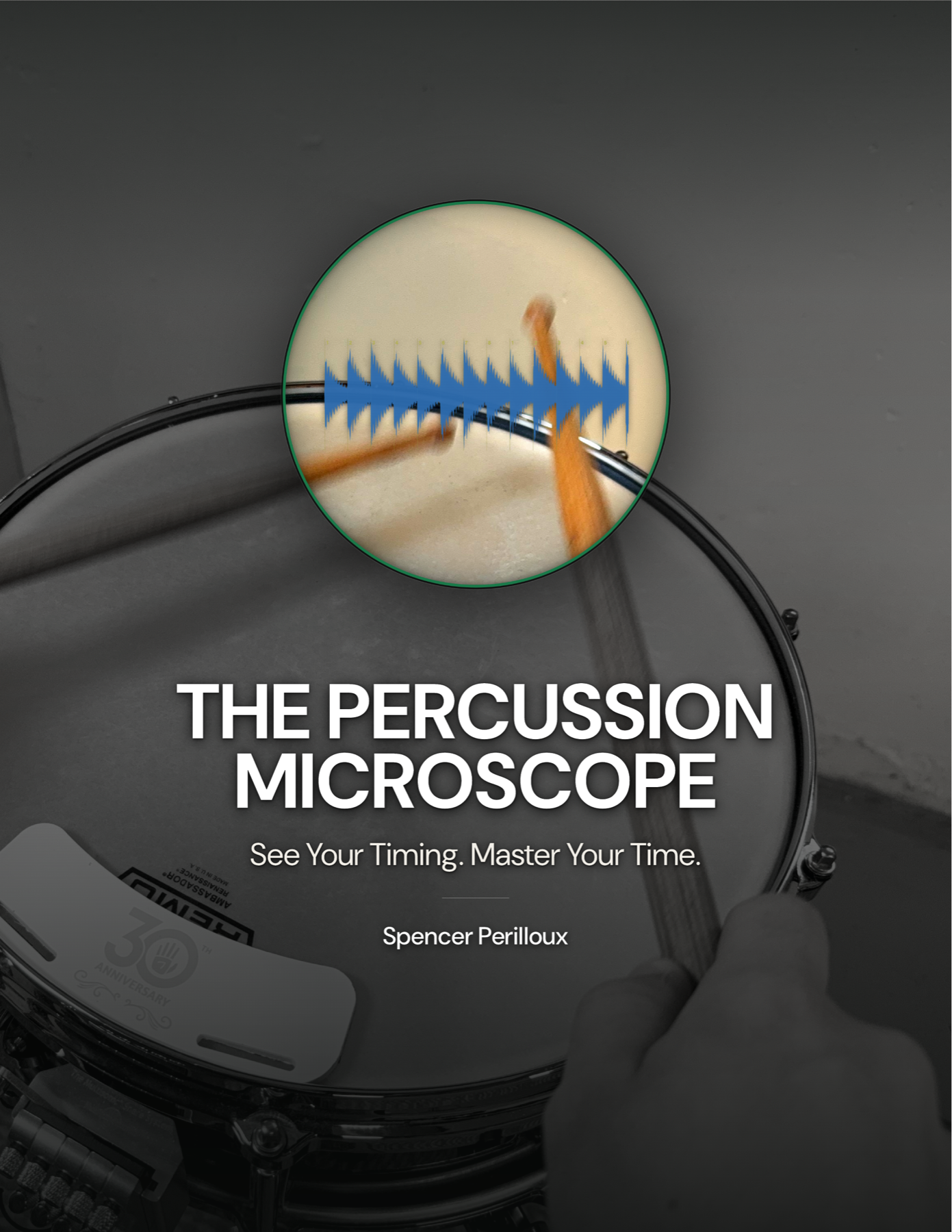
The Percussion Microscope turns a six dollar tuner app into a measuring instrument for your time. Freeze your playing, zoom in, and get an answer instead of an opinion. Start with the free five minute test.
See the full system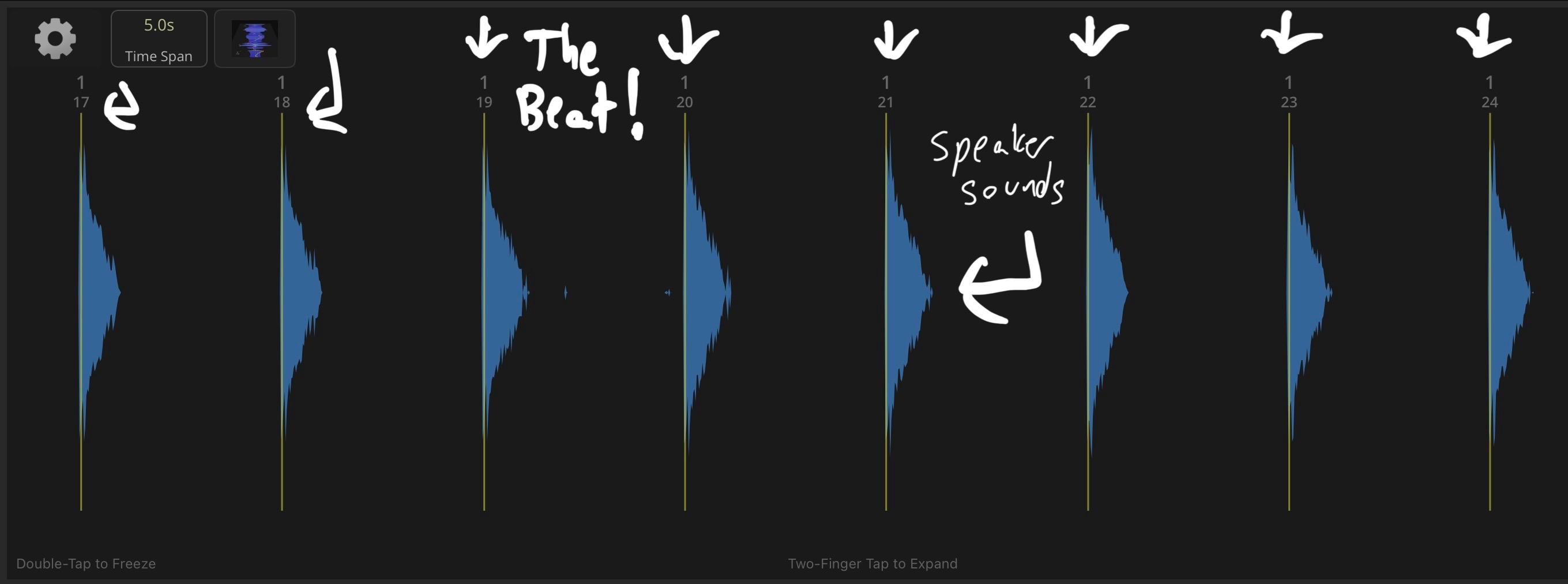
Your teacher says you're rushing. They're probably right. But which notes? By how much? Did the fix hold?
Most of your practice happens alone, with no feedback at all. You can rehearse a small error every day and log it as progress.
And the feeling you can't shake: you play well, but you cannot prove to yourself that it's actually in time.
I built this system because I couldn't shake it either.
I spent years preparing for major orchestral and military-band auditions. I never won the job I chased hardest, and I say that plainly because this system is about proof, and you deserve the honest version of mine. I did not have this method in place for those early cycles. It took shape later, after I kept finding the same problem: my re-entries after long rests were late, and I could not hear them as late. The waveform showed me in one session. So I engineered every space, verified every fix on screen, and repeated the results until being objectively correct in my timing was no longer an open question, because I could prove it. Other parts of my audition technique still did not get me all the way there. This book is the part I did solve.
Spencer Perilloux. M.M. University of Michigan. Percussion mentor, Detroit Symphony Orchestra Civic Youth Ensembles. Performer, Saginaw Bay Symphony Orchestra.
Not chapters. Capabilities. Each of these is a named technique inside the system, and each one changes what your practice room can tell you.
Your first diagnostic uses no sticks and no drum. Thirty claps against the grid expose the lean you've carried your whole career, and the direction tells you what to fix first.
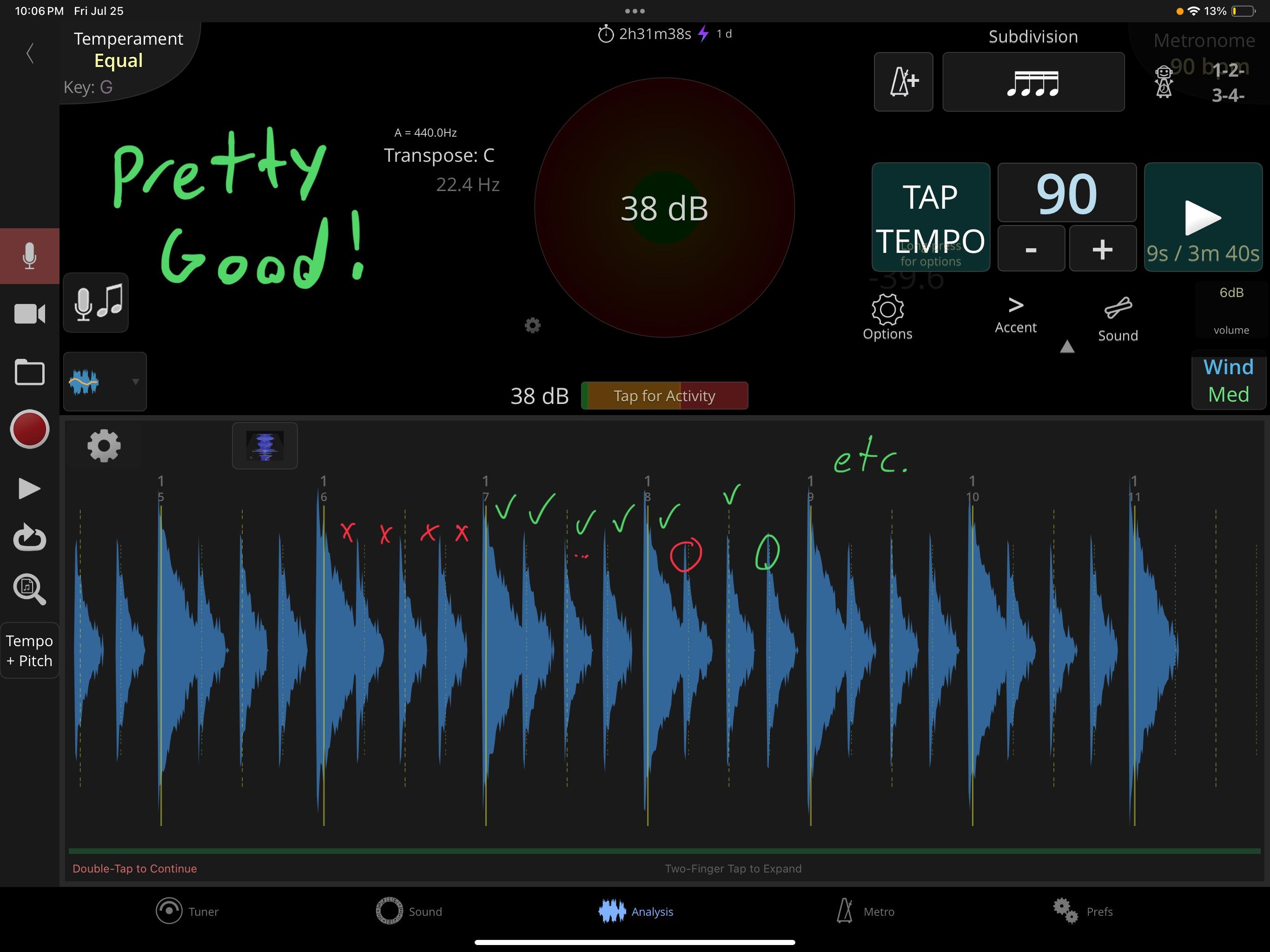
Play with the markers hidden, then reveal the grid over your finished take. Your internal clock gets graded by evidence, and confidence built on twenty clean reveals survives pressure.
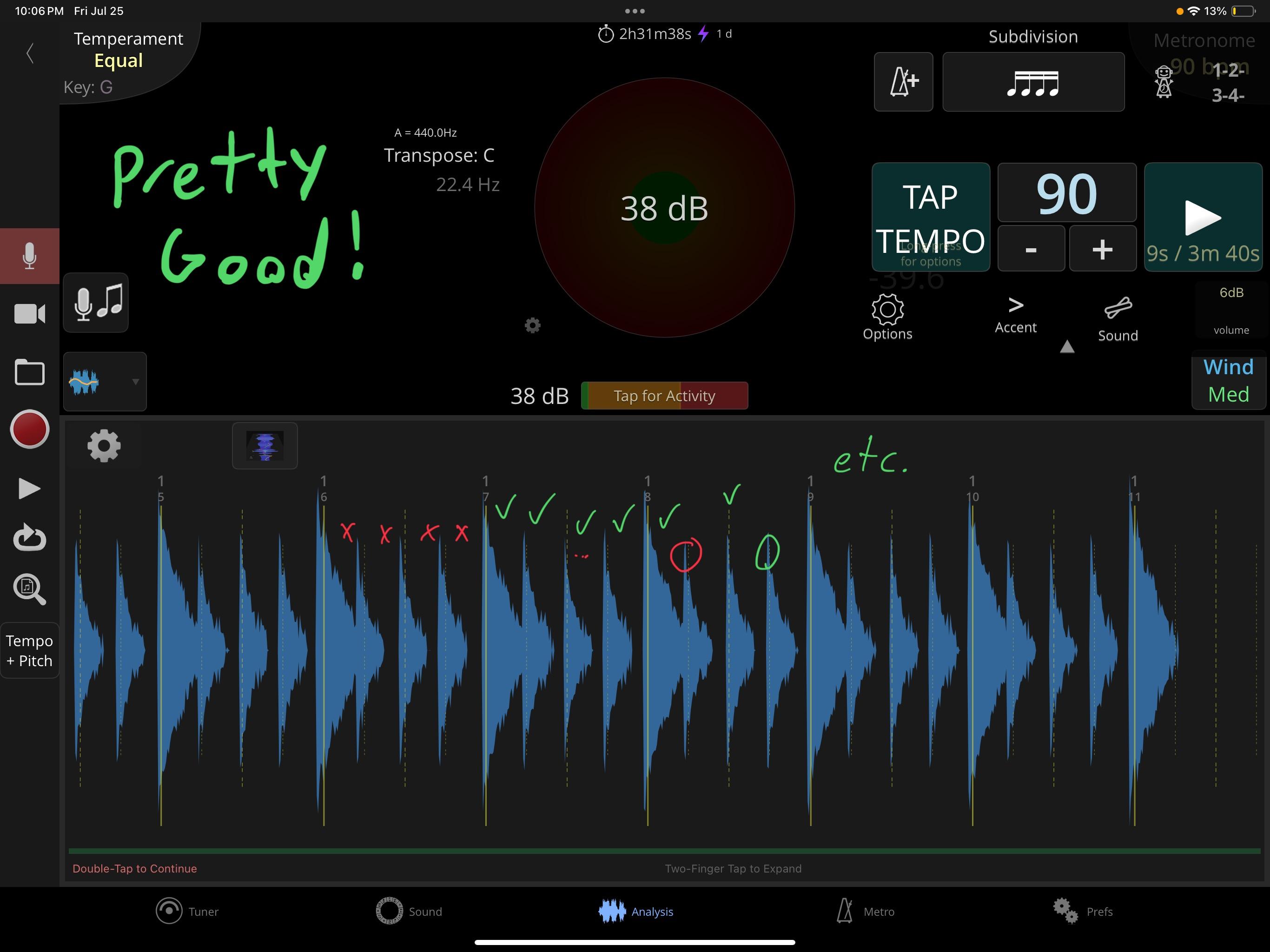
A metronome configuration you will not find taught anywhere else. You hear only the quarter note pulse. The screen silently grades every sixteenth you play. Musical feel and scientific feedback at the same time.
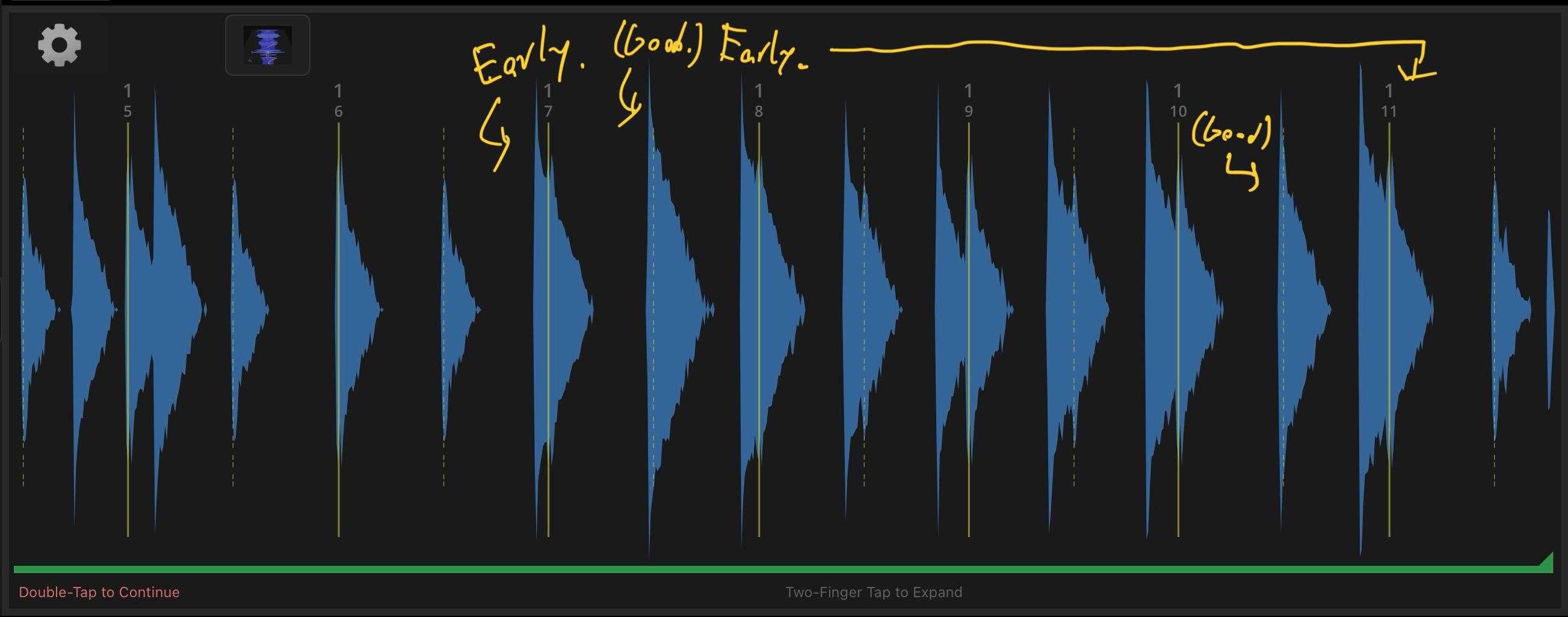
The click moves off the downbeat, then thins out, then nearly disappears, while the grid keeps grading everything. The road to being metronome independent but aligned.
Plus the Zoom Rubric for grading your own progress, roll and rudiment analysis, daily routines, troubleshooting, and a printable progress log.
Backwards. The waveform polices when a note happens and how loud it is. It says nothing about articulation or color, and those are where your voice lives. Rhythmic tension and release are only audible when the time underneath is stable, the same way harmony is only audible in tune. The greatest artists bend time on purpose. Earn the control first, and every departure becomes a decision.
For a few weeks, you'll want to check everything. That's withdrawal from guessing, not addiction to a screen. The system has weaning built in: the Blind Test and the Silent Grid deliberately take the display away and make your ears answer first. The destination is a player who hears it without looking. This trains your ears. It never replaces them, and it never replaces a teacher.
The player who suspects their time is off and can't prove it. Vague feedback has left you wondering whether you're improving or fooling yourself. You want an answer.
The player who is already strong and wants the last few milliseconds. Drum corps, auditions, serious study. You want training that matches your work ethic.
It is not for someone looking for a shortcut. This system shows you your real playing, and the first week of that takes some courage.
Free.
The first five minutes of the system.
$47.
The complete manual: every diagnostic, every drill, the Silent Grid, the Independence Ladder, routines, troubleshooting, and the progress log. Instant delivery, yours forever, free updates for life.
$147.
I put your playing under the Microscope personally and hand back the evidence with your fix protocol.
Learn moreComing soon.
Every technique demonstrated on camera, plus the full ear calibration layer.
Bought any earlier edition of this system (Locked In)? The new edition is yours free. Check your email, or write me at spencer.perilloux@gmail.com.
Read it, run the diagnostics, and put your own playing under the microscope. If it doesn't change what your practice room can tell you within 30 days, reply to your receipt email and I'll refund every dollar. No questions, no hoops.
Every practice session for the rest of your life either has feedback or it doesn't. The Percussion Microscope is the difference between hoping your time improved and watching it improve, measured, on a screen, in evidence you can trust. Start with the free test if you're skeptical. That's what it's for.
TonalEnergy Tuner & Metronome. I have no affiliation with it. The book tells you exactly which settings matter.
As far as I know, the required Show Beats feature does not appear on Android. It does appear on modern iPhone and iPad models, and you do not need the very latest device. I have not confirmed whether it appears in the Windows or Mac versions.
No. The system meets you at a clapping test and scales to audition-level work. Both ends are covered.
PDF, formatted to read cleanly on screen and to print beautifully. Instant email delivery after checkout. Free updates for life.
No. The new edition is free to every past buyer. Check your email or contact me.
30-day full refund, no questions asked.
Questions before buying? spencer.perilloux@gmail.com